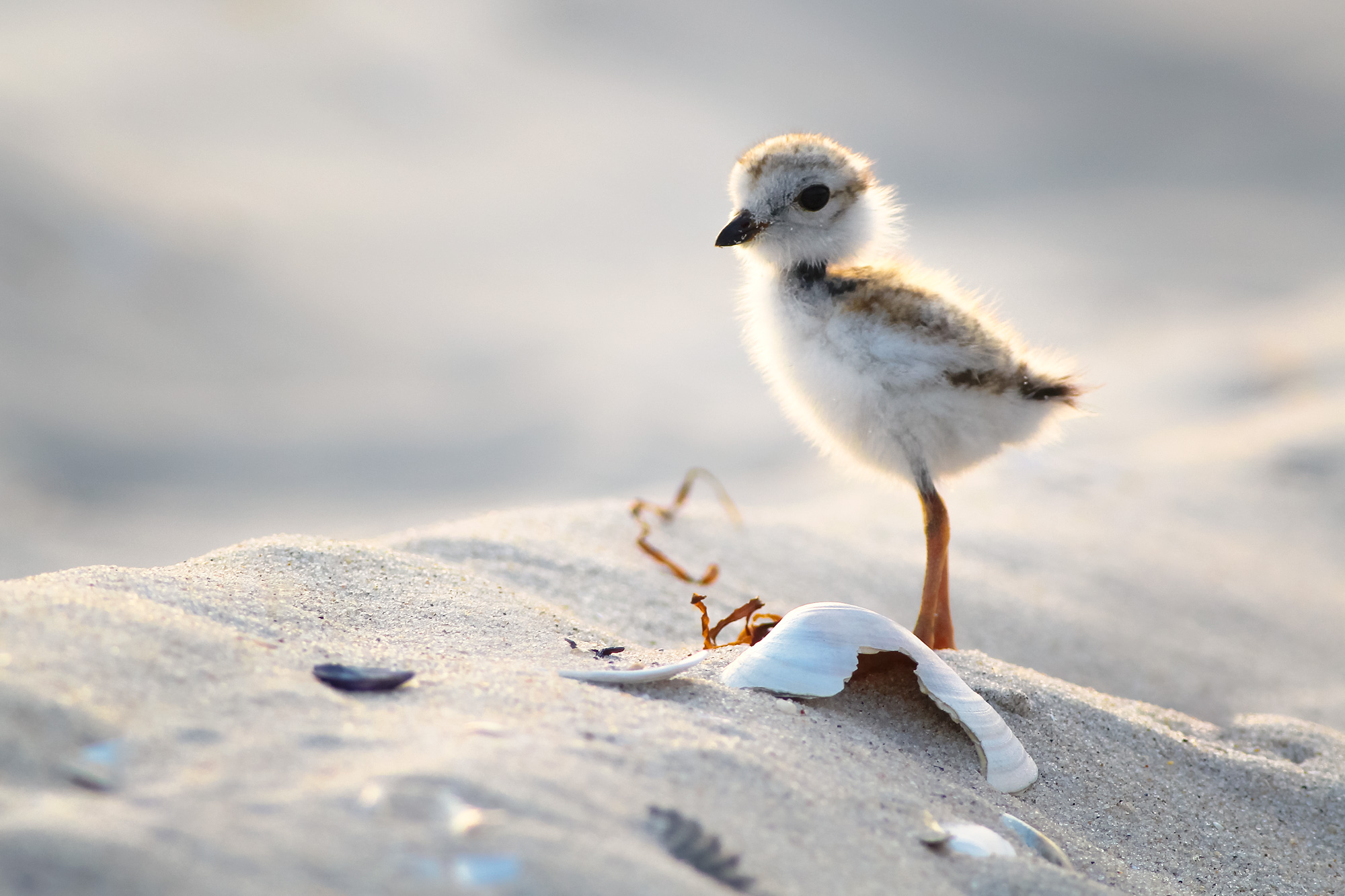
It’s no secret that The Sandpaper is my favorite newspaper. It is likely the greatest local newspaper in the U.S.A. Last week, editor and wildlife advocate Jay Mann visited the Lighthouse, and I was thrilled he took the time to check out the Piping Plovers. Fortunately, he saw one, which is one more than most people see.
Unfortunately, when people walk away having only seen a single endangered beach-nesting bird, it begs two burning questions. Does anyone know what’s going on in there? And two, why did they expand the habitat restoration area if there is only one plover?
Those are important questions because without the right answers, the incredible gift of the habitat restoration is easily misunderstood.
I set out to answer those questions with a letter published this week, in full color, with a great photo by local legend Ryan Morrill. If you’re in Ocean County, grab a hard copy so you can cut it out and add it to your “I (heart) Readings From The Northside Scrapbook” scrapbook. Where I wrote “(heart),” you can paint, sticker, or decoupage a little heart. You could use two overlapping eggs to make the heart because that would be hardcore scrapbooking and on-brand.
Anyway, here’s the letter. I hope you enjoy it because it’s from the heart.
####
May 18th, 2025
Last week, Jay Mann’s Fish Story asked some questions regarding his recent visit to Barnegat Light State Park. As a nesting bird monitor who surveys the site daily from April through August each year, I have some answers.
During your visit, 10 adult plovers were tending to 5 nests, with two males still establishing territories. Even though all but one of the nests is visible from outside the fence, you didn’t see them because of their remarkable camouflage. As Island natives, Piping Plovers have perfected the art of blending into our sandy beaches. Their ability to sit motionless on the open beach, incubating their eggs for a month, is truly astonishing. Even when we point them out directly to visitors, they often still can’t see them; their adaptation is flawless.
Next, your suggestion to use numbered markers along the habitat is wise, but the fence posts must move often due to flooding, vandalism, and the changing needs of visitors and birds. Adding larger, more permanent posts creates perches for avian predators and draws the attention of others.
But we have a similar, though more primitive, way we handle this need and a much more sophisticated one too.
As you walk along the inlet, you’ll notice five main cut-throughs into the restoration area through the dune. These cut-throughs serve as ideal markers, as the birds use them as natural territory dividers. The habitat restoration has evolved in such a way that each pair usually controls one cut through, allowing them and their chicks safe passage from the inlet to the park interior and back. This restoration is not just about creating a habitat, but also about ensuring safe passage for the birds.
But the real solution is our NestStory software. NestStory is now used coast-wide and was actually invented here on Long Beach Island a decade ago! NestStory uses GPS accuracy to two square feet to record the locations of everything: every bird, every nest, every egg, every chick, every track, every predator—everything! With just the tap of a cellphone screen, staff and volunteers record the precise locations of every detail, every day, and make them available to managers in real time. Thousands of locations are recorded each summer in Barnegat Light, and NestStory makes them all available in layered maps. This data allows unprecedented visibility into every aspect of life in the Park and enables us to see changes over time with convenient heat maps. NestStory is as astonishing as the Piping Plovers’ camouflage.
Lastly, you asked why the Park needs to be so big. The answer is simple: habitat loss. Our native animals historically had 18 miles of beach. Over the last century, we have taken 16 miles away from them. This loss, multiplied across the coast, has led to the collapse of these unique species. The area of restored habitat gives just a tiny, tiny fraction back to them to help fend off their extinction. The size of the Park is a crucial factor in our fight against habitat loss, and it’s a stark reminder of the urgency of our conservation efforts. Every day, we are racing against time to ensure that future generations can continue to cherish the Island’s natural history. Your support and involvement are crucial in this fight.
Here’s a great way to look at it: We currently have five Piping Plover nests, five American Oystercatcher nests, and about two dozen Least Tern pairs prospecting the habitat restoration. If they all succeed and hatch, that’s 151 threatened birds housed in the restoration area, and that’s not even counting all of the shorebirds, waders, songbirds, ducks, and raptors who have flocked to the area for its safety, water features, forage, and open space. If you saw 150-plus people milling about in there, you’d think it was a party. And that’s precisely what it is. It’s a celebration of our successful habitat restoration efforts and the hopeful future of the Park. This success is a testament to our collective efforts and should fill us all with pride and optimism for the future.
This ‘party’ is just getting started. I encourage you to take another hike there in late June. If this season is anything like the last few, the restoration area will be teeming with delicate life to the extent that parts of it will be closed even to the state officials and professional researchers who work there!
Northside Jim, The Little Egg Foundation


Wow, right on with this reply, and fantastic description of the value of the investment in habitat improvement to benefit the most endangered species. Thank you!